History with its flickering lamp stumbles along the trail of the past, trying to reconstruct its scenes, to revive its echoes, and kindle with pale gleams the passion of former days. ~Winston Churchill

Showing posts with label 1900s/10s. Show all posts

24 December, 2015

Santa Claus Town, 1916

Just in time for Christmas! This set of images is devoted to some of the goings-on of Santa and "Santa Claus Town" in 1916, as pictured by a combination of drawing and composite photography. The context of these is unfortunately unknown; they were deposited with the British Library to register their copyright, indicating commercial use, but what that use was I do not know. The images fortunately do come with captions--some of which only raise more questions. 


The British Library

"Santa Claus Town." Source


The British Library

"Santa Claus Palace." Source


The British Library

"The palace bears." Of course Santa keeps polar bears in his palace! Source

18 April, 2015

The San Francisco Earthquake, Tinted

The devastation of the great San Francisco Earthquake, on this day in 1906, is extensively photographically documented. There are thousands of monochrome photographs, some of which I've shared before, printed in newspapers or mass-produced as postcards. There are even a few true colour photographs, made with a rare early process. 

The images in this post are stereoviews of post-earthquake scenes, photographs translated into low-quality half-tones, and then hand-tinted for commercial sale. I find them fascinating as an insight into the desires of early 20th century consumers of photography--even in documentary photographs, and even for photographs of a tragedy, applied colour was a selling point. 


New York Public Library

Workmen taking down unstable walls. Source


New York Public Library

A cracked Van Ness Avenue. Source


New York Public Library

The wrecked synagogue, Powell and Sutter Streets. Source

28 January, 2015

New Zealand in Autochrome

Beautiful colour photographs from New Zealand, 1913-1915. These autochromes, taken by avid amateur photogrpaher Robert Walrond, mostly depict Auckland and area. The Public Domain Review has an excellent, detailed article discussing autochromes in New Zealand from the same collection, with a particular focus on those by Walrond. The article includes more still lives and portraits; I've chosen outdoor views. 

The autochromes come from the collections of Te Papa, the national museum of New Zealand, in Wellington, which is terrific museum all round. 


Te Papa (A.018181) Purchased 1999 with New Zealand Lottery Grants Board funds.

Albert Park, 1915, Auckland, by Robert Walrond. Source


Te Papa (A.018203) Purchased 1999 with New Zealand Lottery Grants Board funds.

Mount Hobson from Mount Eden, 1913, Auckland, by Robert Walrond. Source


Te Papa (A.018191) Purchased 1999 with New Zealand Lottery Grants Board funds.

Tree fern, 1915, Auckland, by Robert Walrond. Source

11 December, 2014

Brilliant Luna Park at Night

Photographs of the fanciful nighttime illuminations at Luna Park, one of the two major early twentieth century amusement parks on on Coney Island, shortly after it opened in 1903. 


Library of Congress


New York Public Library


Library of Congress


24 September, 2014

The Alps in Photochrom

High time for photochroms! Today, the Swiss Alps, in images published in 1905. 

Photochroms, for the uninitiated, are a kind of photolithograph, made commercially in the late 19th and very early 20th centuries. 

Library of Congress

Gemmi Hotel and Leuk, Valais. Source


Library of Congress

Bernese Alps, from Stanserhorn. Source


Library of Congress

Frutigen, church and Alps. Source


06 September, 2014

An Air-Ship Built For Two: Songs of the 1910s

Before there were records, there was sheet music. Popular songs could be enjoyed over and over again at home, if only you had someone who could play the piano and sing all right. Thanks to the New York Public Library's collection of popular American sheet music, we can still enjoy these songs over and over again. Or at least the titles and covers, which are pretty great. 

In February we had a look at love songs of the 1890s; this time around the decade is the 1910s. By then, of course, there were also records, and of course, by now, there's Youtube, so, amazingly, a few of the selections below come with the chance to listen, too. 

So what did people like in their songs in the 1910s? Apparently rags, romance, and air travel. 


New York Public Library

Published 1910. Source


New York Public Library

Published 1913. This one actually stayed popular for a long time, at least into the 1950s. You can listen to a 1913 recording, although it doesn't have the words. Source


New York Public Library

Published 1912, and apparently a classic rag. On YoutubeSource

30 July, 2014

Adorable Kittens of 1902

Nothing meaningful or insightful, just some very, very cute kittens from 1902. 

These photographs come from the Canadian Copyright Collection of the British Library (which the BL put on the Wikimedia Commons). From 1895 to 1924, to register copyright in Canada you had to send one copy of the relevant work to Canada, and one to the British Library. So whoever took this pictures copyrighted them--why isn't known, although I suspect it was for use on postcards, as lots of similar kitten photo postcards can be found. No other information is known (including why they are called "The Globe Kittens"), although pretty much every site mentioning the Canadian Copyright Collection on the Wikimedia Commons has shared at least one image of the set (I haven't found any posts with all, though! and all are just so darn cute). 


British Library


British Library


British Library


12 May, 2014

Go to Kew

High time for a revisit of the amazing poster collections of the London Transport Museum! Posters celebrating flowers and spring are some of the collection's loveliest. Some of my absolute favourites of these are those promoting Kew Gardens, the Royal Botanic Gardens of London (and a truly lovely place; the posters aren't exaggerating!). One of my earliest posts shared a number of great Kew posters; here is another set. 


by Emilio Camilio Leopoldo Tafani, 1915. Source


by David Wilson, 1926. Source


by Althea Willoughby, 1933. Source


27 April, 2014

Through Biplane Rigging

I'm extremely fascinated by snapshot photos taken from the cockpits of WWI biplanes, as I've posted several times. I love the fact that a lot of these guys really wanted to take pictures up there, just for fun (these are all from training, when this was possible). Often you can tell from the position that it's the pilot taking the pictures, too-- not as easy with a Vest Pocket Kodak as with an iphone or even a Leica, especially when you're flying what is essentially a kite with an engine. But some of these fellows just loved doing it, and filled albums with their photos (a couple favourite examples). 

One of the things I love to see in these pictures is the unintentional aesthetic created by the limited position of the photographer. Wings and rigging are caught in shots of the landscape or other planes, crisscrossing the scene, cutting it up or sometimes framing it. I think the rigging and wing interference shots are amazing both for the way they ground us in the place of the photographer, and for simply looking cool.

All but one from two albums by different pilots at training air fields in Texas during World War One. 


San Diego Air and Space Museum

This one fellow often captions the photos in his albums--thanks to SDASM for including these! Source


San Diego Air and Space Museum


San Diego Air and Space Museum

The Grand Canyon, 1931. Source

15 April, 2014

Magic Splendour of Electric Blaze

A variety of terrific sterographs depicting the illuminations at the 1904 World's Fair in St. Louis, published bey several different stereo companies. Like the buildings created for the Chicago World's Fair in 1893, the St. Louis Fair's buildings were not designed to last more than a year or two. All but one of these buildings were demolished shortly after the event ended.

By the way, if you can free-view (look at stereos the right way to get the 3-D effect without a viewer) or would like to try (it's like magic eye)-- these really are just incredible in stereo. 


Library of Congress

The Festival Hall. Source


Library of Congress

Another view of the Festival Hall. Source


Library of Congress

Palaces of Electricity and Machinery. Source

09 April, 2014

Happy Birthday Postcards!

A batch of early twentieth century birthday postcards, for my sister's 23rd birthday!


New York Public Library

Postmarked 1910. Source


New York Public Library

"Congratulations on your birthday" just isn't something we say anymore... Unwritten. Source


New York Public Library

Postmarked 1907. Source

03 April, 2014

Hand-Tinted Gardens

Hand-tinting of lantern slides tends to be garish at best, and toe-curling at worst (though also, in my opinion, almost always enjoyable!). However, there is nothing inherent about that process that dictates this result. These slides are a beautiful illustration of this fact. They come from a collection of more than 1000 held by the Library of Congress, taken by photographer Frances Benjamin Johnston from the 1890s to 1930s. The slides were projected at lectures promoting gardening. The tinting is just exquisite, bringing the best of painting to already-fine photography. 

There is apparently a book on these slides entitled Gardens for a Beautiful America, 1895-1935 by Sam Watters; I haven't seen it in person (and my graduate budget sadly precludes buying it at the moment) but it looks terrific!


Library of Congress

"Chatham," Colonel Daniel Bradford Devore house, Fredericksburg, Virginia, 1927. Source


Library of Congress

"Newmar," Senator George Almer Newhall house, 1761 Manor Drive, Hillsborough, California, 1917. Source


Library of Congress

"Armsea Hall," Charles Frederick Hoffman Jr. house, Narragansett Bay, Newport, Rhode Island, 1914.  Source


28 March, 2014

Wing Walking

Wing walking, of course, is one of the crazy stunts pilots got up to in the earlier days of aviation. It is still done sometimes, but with wires and straps and thing to make sure the practitioners won't die. Back in the days these photos were taken, there were no such safeguards. Pilots would simply climb out of their cockpits and stand, sit, or hang from the wings or fuselage. This kind of thing was very popular in stunt shows of the 1920s, though it was being done for fun much earlier.

The majority of these photos depict an American barnstormer of the 1920s named Carter Buton, whose antics are documented in scrapbooks temporarily held by the San Diego Air and Space Museum. However, the albums of WWI pilots-in-training yield plenty of examples at least as daring, done just for the benefit of fellow pilots, and/or just for the hell of it.

If you're afraid of heights, you might want to click away now...


San Diego Air and Space Museum

Carter Buton, 1920s. Source


Deseronto Archives

RFC pilot and flight instructor Lt. Ned Ballough, known as the "wing walker", Ontario, WWI. From this album. Source


Deseronto Archives


Lt. Ned Ballough again, Ontario,WWI. Source

10 March, 2014

Pictures from the Pictures, 1912-1915

An assortment of early film stills/ production photographs from this blog's buddy the New York Public Library. Very little information can be found about most of these films (I've included links for the rare exceptions); probably most of them were lost a long time ago, like thousands of other early films. I find it quite interesting, really, to get this one moment (or a couple moments, for films with more than one photo) and nothing else, leaving the rest of the story to your imagination.

As noted,  photos come from films released 1912-1915 (I'm not sure why these specific dates, exactly; the NYPL sadly has no blurb about their selection (of about 100; this, of course, is my selection from their selection!)).


New York Public Library

"The Harvest," 1913. Source


New York Public Library

"Dr. Polly," 1913 [very obviously from another time...]. Source


New York Public Library

"The New York Hat," 1912 (you can watch this one on youtube). Source


04 February, 2014

Indigo Agonies

Frances Benjamin Johnston (1864-1952) was one of the first prominent female professional photographers in the United States, working mostly as a photojournalist and portrait photographer. The Library of Congress has about 20,000 of her prints and 3,700 thousand of her negatives, dating from the 1880s to 1940s (you can find the digitized photographs of the collection here). 

This post focuses on just a portion of her early work, printed in cyanotype form. I'm not sure how often these cyanotype prints were intended as a final form,  or if they were used purely as a proof prints or reference prints for negatives (as, for instance, these cyanotypes were). Some, it seems were put into personal books made by Johnston. 

Most photographs were taken in or around Washington D.C.


Library of Congress

The cover of one of these personal books, and the source of the title, "Indigo Agonies", which is great. The book, made in 1888, is from Johnston's very earliest days as a photographer; she became a professional shortly afterwards. The photograph depicts Johnston at her camera (see second to last image in this post). Source


Library of Congress

Photograph of women being photographed, ca. 1890. Source


Library of Congress

Students sketching at the edge of a pond, about 1899. Source

30 December, 2013

Skiing in Norway

Photographs of people skiing in Norway in the 1910s and 1920s, taken by Kristian Berge, the same amateur photographer whose landscape photographs were featured in this post


Fylkesarkivet i Sogn og Fjordane

Skiers ready to set out, ca. 1918-1920. Source


Fylkesarkivet i Sogn og Fjordane

Skiers taking a rest, 1924. Source


Fylkesarkivet i Sogn og Fjordane

A cross-country ski race, 1924. Source

29 November, 2013

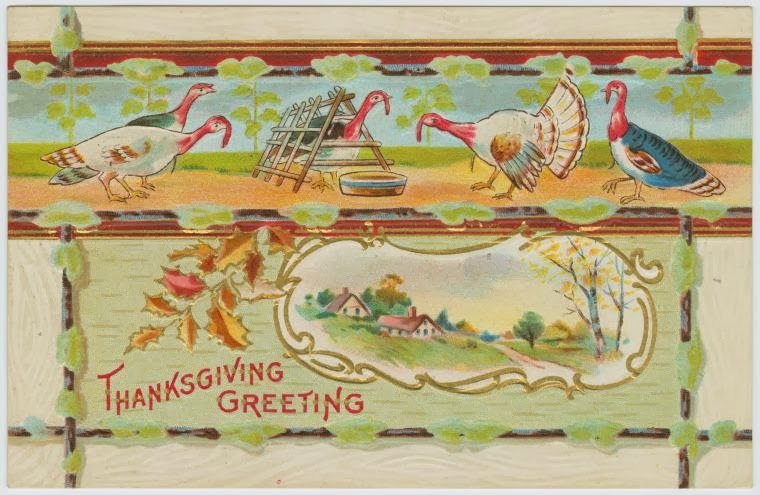
Thanksgiving Leftovers

Happy belated Thanksgiving to the American folks! To go with those leftovers, how about a few early 20th century Thanksgiving postcards from the New York Public Library? 


New York Public Library

Postmarked 1909. Source


New York Public Library

Postmarked 1915. Source


New York Public Library

Written: "Why is it I never hear from you?" Postmarked 1909. Source


Related Posts Plugin for WordPress, Blogger...

Search This Blog